
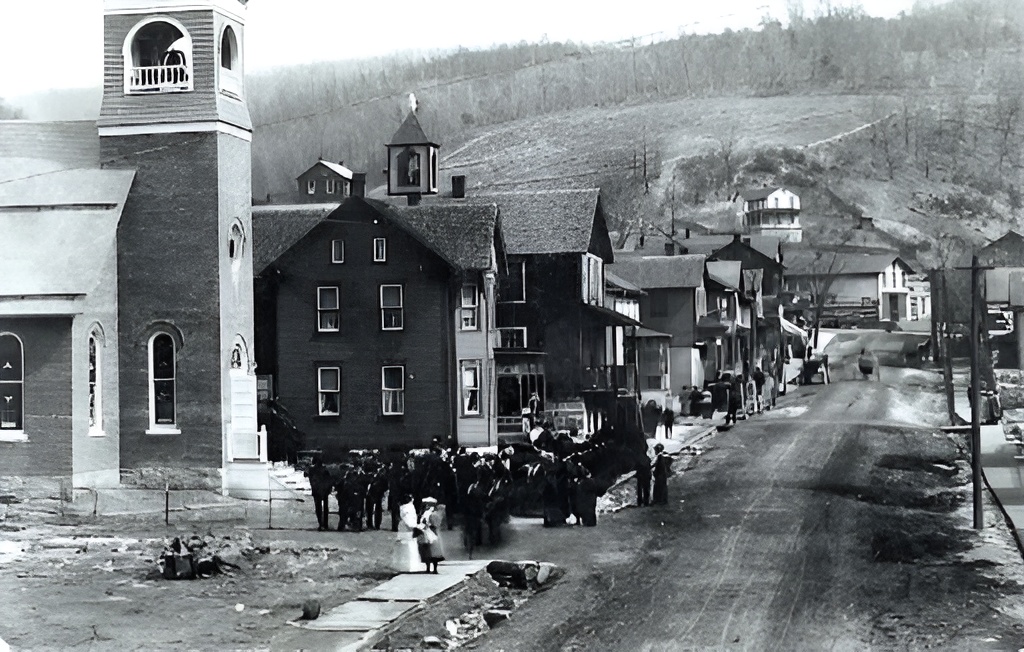
Born just a short ride from Sterling Run in the tiny logging village of Mix Run, Pennsylvania, Tom Mix grew up in the same rugged north-central Pennsylvania terrain that defines this region today.
He rode horses.
He worked farms.
He embodied frontier grit.
Mix went on to become one of the most famous stars of the silent film era, starring in nearly 300 Westerns and commanding some of the largest paychecks in Hollywood during the 1920s. At the height of his fame, he was earning what would be the modern equivalent of tens of millions of dollars per year, personifying the mythic American cowboy in a way no one before him had.
He had income.
He had notoriety.
He had scale.
But he did not have durability.
A combination of lifestyle expansion, multiple divorces with significant alimony, speculative ventures such as circus ownership, and the devastating market crash of 1929 eroded much of what he earned. By the time of his death in 1940, most of his substantial fortune had vanished. Even his personal belongings were distributed by court order shortly thereafter.
Tom Mix’s story is not one of failure.
It is a cautionary distinction.
Elite earnings do not guarantee generational wealth.
Wealth is not built through spotlight or scale.
It is built through discipline, structure, and stewardship.
We are not building a platform for headlines.
We are building a platform designed to endure.
Because legacy is not defined by what you earn in a single cycle.
It is defined by what you protect, grow, and pass forward.
This region understands something Hollywood often forgets:
Durability outlasts drama.
The rugged terrain of north-central Pennsylvania does not reward flash.
It rewards discipline.
And that philosophy shapes how we allocate capital.
we welcome a confidential conversation.
We use cookies to improve your experience on our site. By using our site, you consent to cookies.
Manage your cookie preferences below:
Essential cookies enable basic functions and are necessary for the proper function of the website.